

This is Life as a Sacred Text 🌱, an everybody-celebrating, justice-centered voyage into ancient stories that can illuminate our own lives. It‘s run on a nonprofit, so it’s 100% NAZI FREE. More about the project here, and to subscribe, go here:

tl:dr: here's a suggestion for thinking about love songs in a new way– a test to see whether they might be the worst of our toxic culture or might help foster the best parts of us.
When I was a freshman in high school, I stayed over at a friend's house one Saturday night. It was somehow decided that I would join her at her Christian youth group the following morning.
Kirst and I had other things in common, needless to say, but sure, fine– I'd tag along this time, I guess, for ease of logistics?
So then we’re sitting around in a circle, and the youth pastor plays Peter Gabriel‘s "In Your Eyes," which was a major song at the time (this was 1989, the same year Say Anything came out.)
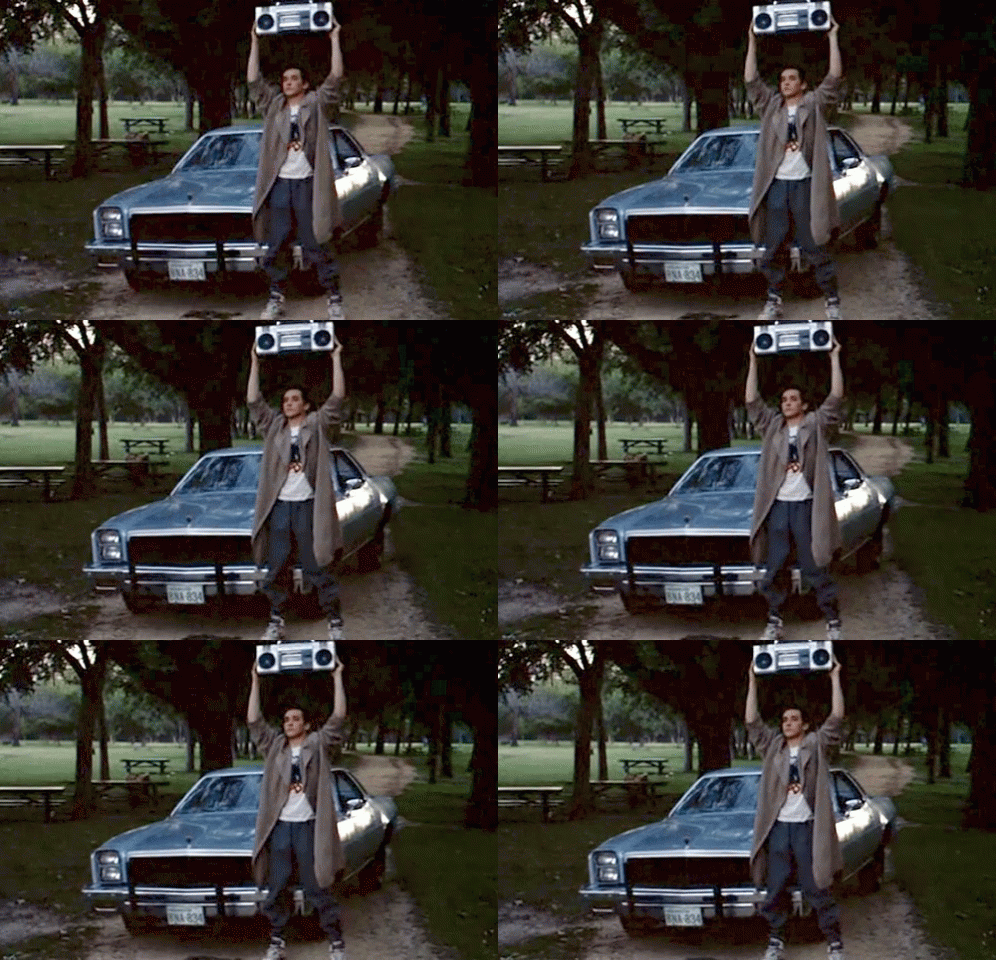
Youth Pastor asked us to consider how we might hear this song as not a love song to a partner, but, rather, as a love song to God.
Now, at the time it felt like– and, candidly, I really think it was– one of those Youth Group Pastor (tm) attempts to try to be relatable to kids via pop music because the song had a lyric about churches – but I was a little atheist Jew at the time, so I definitely wasn't the target audience regardless.
But not long ago, a dear friend and I were talking about the toxic state of pop music and the way that it’s always been toxic, honestly.
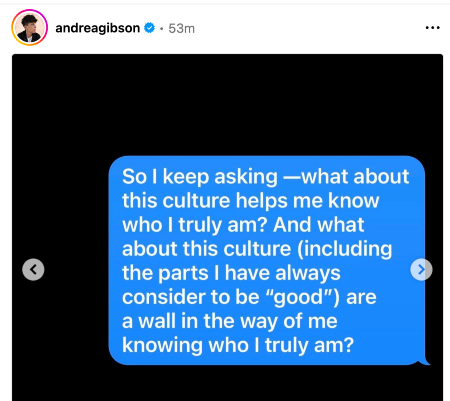
Part of this is about how our culture often reflects kyriarchy– we could be here all day listing all the songs and books and movies etc. that reflect and amplify our society's misogyny, ableism, racism, transphobia, fatphobia, horrible ideas about a person's worth being about what they produce or how much wealth they possess, and more. Sure.
And part is about what happens when you live in a culture that both fears death and requires the novel to survive (e.g. declaring those jeans out of style is how you make people buy new jeans).
So we valorize youth, lift up culture made by young people who are, all too often, still deep in their damage, or who don’t (yet) have very healthy ideas of what relationships could look like.
For a lot of us, a lot of getting older means seeking insight into our own stories and histories, doing a lot of healing work, trying to find new ways of being and doing that are better than how we used to be. (Not everyone, obviously–*gestures around*) For many of us, the older version is a bit wiser than who we were when we were younger. It's not always by choice, sure– sometimes life happens at us, and we're forced to grow as a result– but still.
Of course, some folks show profound wisdom from the a young age, some artists get less helpful as they age, some apparently seem to show their true colors more, and some just start toxic and always stay that way. And not all singers are songwriters, sure.
But between a bunch of kyriarchy and unresolved trauma, we hear a lot of unhelpful words echoing in coffee shops and the grocery store, in the background of social media and scoring our movies, telling us what our most intimate relationships should look like.
And like it or not, those words seep in, become part of the soup of our thinking. Especially if they're words with which we connect in some way.


How many times have you revisited a song that had gotten you through a bad breakup at some earlier point in your life, and thought,
"Oh, wow... the protagonist of this song should maybe respect– or set– some, uh, better boundaries??" Or try using their words??
😬
And even as some of these artists grow and age– and perhaps gain perspective and wisdom– our culture has often moved on, and we (the collective cultural we) so often demand that they continue lifting up their earlier– sometimes less sage work. As my friend put it, "Even Joan Baez is stuck singing 'Diamonds and Rust,' forever." (Not that she wasn't wise then. But come on.)
But here's the thing:
Some artists, even popular musicians, are able to do some of thing that art is supposed to do– to connect us with something bigger, beyond ourselves, to bring a wider vision of the universe, of what's possible, into being.
What I'm about to share is a rough idea, not some unshakable truth.
This is just a possible lens to play with!
👉 Always beware of binary thinking.
But I'll start with the observation that every religious path, just about, has a tradition of love songs to the divine, expressions of longing and seeking union. For example, Jewish Friday night (Shabbat) services begin, in many communities, with Yedid Nefesh:
Beloved of my soul, compassionate parent, draw Your servant to Your will. Let Your servant run like a gazelle to bow down before Your splendor. Let Your affection be sweeter than a honeycomb or any other taste. Splendorous one, most beautiful radiance of the world, my soul is sick with love for You...
Sick with love! Affection sweeter than any taste. This is a longing that has not been met yet– a longing for what the Hasidic tradition refers to as deveikut, union with the divine– from the same root as the word to unite, to cling, that's used to describe what happens in Genesis 2:24:
Hence a man leaves his father and mother and clings to his wife, so that they become one flesh.*
The connection between union with the Holy and the love we feel down here has always been visible.
We see not dissimilar language from Yedid Nefesh in Sufi poetry, like this from the 13th c. North African poet ‘Afīf al-Dīn al-Tilimsānī**
O Gazelle, in my heart, you have a meadow.... There is no life but your love....*In Modern Hebrew, devek is glue, if that helps you grok the word.
**Translation Sulayman Ibn Qiddees. Sufism is, of course, a branch of Islam. (There's a generation of inaccurate translations of Sufi poetry by white non-Muslims, and more Muslim scholars and native speakers of the relevant language(s) have been correcting them.)
The 14th c. Italian Catholic mystic Catherine of Sienna wrote,
“I won’t take no for an answer,”
God began to say
to me
when God opened God's arms each night
wanting us to
dance.
And, I'll note, this line of thinking doesn't discount the possibility for sensuality, sexuality, eroticism, as the esteemed 17th c. Jewish Yemenite poet Shalom Shabazi illustrates, in a piyyut– a liturgical poem– about longing and exile:
I, deep in Exile my feet are sinking.... Morning and evening the Princess* I do recall My heart. my very being throbs with desire.
*Presumably the Shekhina, the indwelling aspect of the divine
Or this evocative take by Shimon HaGadol of Mainz, Germany (960-1020 CE) on the Song of Songs:
The faithful statutes ..were delivered by the mouth of God; their words are sweet to the palate, "[God] kissed me," etc. .... Affectionately [God] conducted me to [God's] chambers. "Oh draw me after thee...."
To the chambers!! (More here!!!)
These poems are plenty erotic. But sexuality here is not exploited, degraded, engaged without consent, horrifying, trite or trivial. Rather, sexuality, here, is an extension of the connection elsewhere in these poems. (More on ancient and contemporary Jewish sexual ethics here.)*
*To be clear, this sex-positive rabbi believes that consent, respect, agency, embodiment, safety, seeing another's wholeness and more can happen in many ways. And though Judaism is a patriarchal tradition with streams that still value (the paternity-confirming convenience of) young women's virginity, there's no rule about waiting until marriage or having just one sexual partner over one's life. So the issue is exploitative vs. connected, whether for ten minutes of butt-shaking on the dance floor or decades of marriage.And these passionate love songs to God sure sound like great (human) romances– and my friend and I began to speculate.